

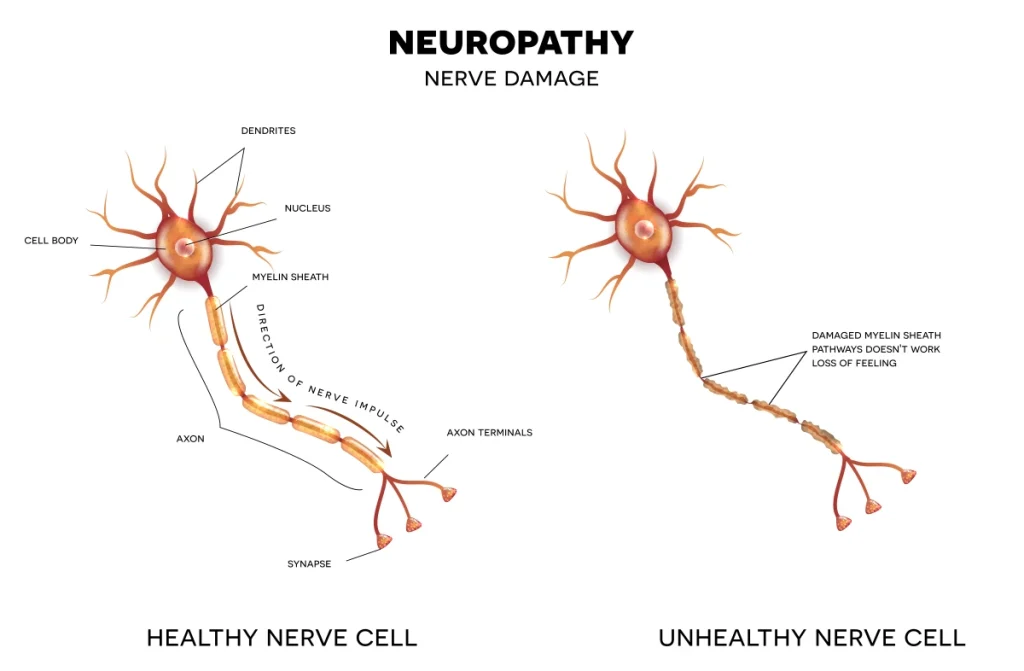
Peripheral neuropathy is a condition that occurs when the nerves outside the brain and spinal cord become damaged. These peripheral nerves control sensation, movement, and many automatic body functions — so when they stop working properly, communication between the brain and body becomes disrupted.
Common Causes
Neuropathy has many possible causes, including:
- Diabetes (most common)
- Chemotherapy treatments
- Post-surgical or nerve trauma
- Autoimmune or inflammatory conditions
- Vascular and circulatory issues
- Idiopathic (unknown cause)
What It Feels Like
People often describe neuropathy as:
- Numbness or reduced sensation
- Tingling or “pins and needles”
- Burning or stabbing pain
- Electric shock-like sensations
- Hypersensitivity or coldness in the hands/feet
These symptoms frequently start in the toes or feet and may progress up the legs. While pain can be disruptive, numbness is often more concerning because it affects balance and walking safety.

Impact on Balance & Daily Life
Healthy nerves in the feet constantly provide information about pressure, position, and surface changes. When sensation fades, it becomes harder to:
- Feel the ground
- React quickly
- Maintain stability
- Walk on uneven surfaces
This increases fall risk and can affect confidence, sleep, and overall quality of life.
How Neuropathy Is Diagnosed
Healthcare providers may assess:
- Reflexes and muscle strength
- Sensation in the hands/feet
- Balance and coordination
Additional testing can include blood work, nerve conduction studies, imaging, and more to identify the underlying cause.

Treatment Options
Traditional medical care focuses on symptom management using medications like gabapentin, Lyrica, or Cymbalta. These may reduce pain but do not repair nerve damage, and patients are often told that the condition is chronic or progressive.
A Natural, Regenerative Approach
Newer conservative treatments aim to improve nerve function, not just mask symptoms. Two examples are:
Neuromodulation (STIMPOD) — a noninvasive therapy that stimulates peripheral nerves to improve communication with the brain, promote nerve regeneration, calm abnormal pain signals, and improve circulation
Red-Light/Photobiomodulation Therapy — uses targeted wavelengths of light to support cellular repair, circulation, and inflammation reduction.
For many people, these approaches provide a more functional path forward by focusing on nerve health rather than lifelong medication use.
Curious If STIMPOD Could Help You?
We’re currently offering free STIMPOD Discovery Visits to help you learn if neuromodulation is a good fit for your symptoms.
During this visit you can:
✓ Feel how the device works
✓ Ask questions
✓ Learn if you’re a candidate
✓ Do it with no pressure and no obligation
📞 Call (504) 407-3477 to claim a Free STIMPOD Discovery Visit
